HOME

CASES

STUDIO

SERVICES

LABS

  • MENU ✶

MENU
CLOSE

(WORK) ✶ BUILDING QUIETLY USEFUL THINGS

  • CODING AND technology

  • ✶

CODING AND technology

✶

(SCROLL) ↓

Often unnoticed, yet woven carefully into daily life, that is the kind of technology I hope to help build. Something people can use without having to think much about how it works, even when a great deal of thought has gone into making it that way.

Often unnoticed, yet woven carefully into daily life, that is the kind of technology I hope to help build. Something people can use without having to think much about how it works, even when a great deal of thought has gone into making it that way.

(01) FIRST PRINCIPLES ✶

MATHEMATICS ✶ MACHINE LEARNING

FIRST PRINCIPLES

FIRST PRINCIPLES

Where else to start from the beginning than beginning itself ?

Where else to start from the beginning than beginning itself ?

(A) A) EXTENDED ESSAY

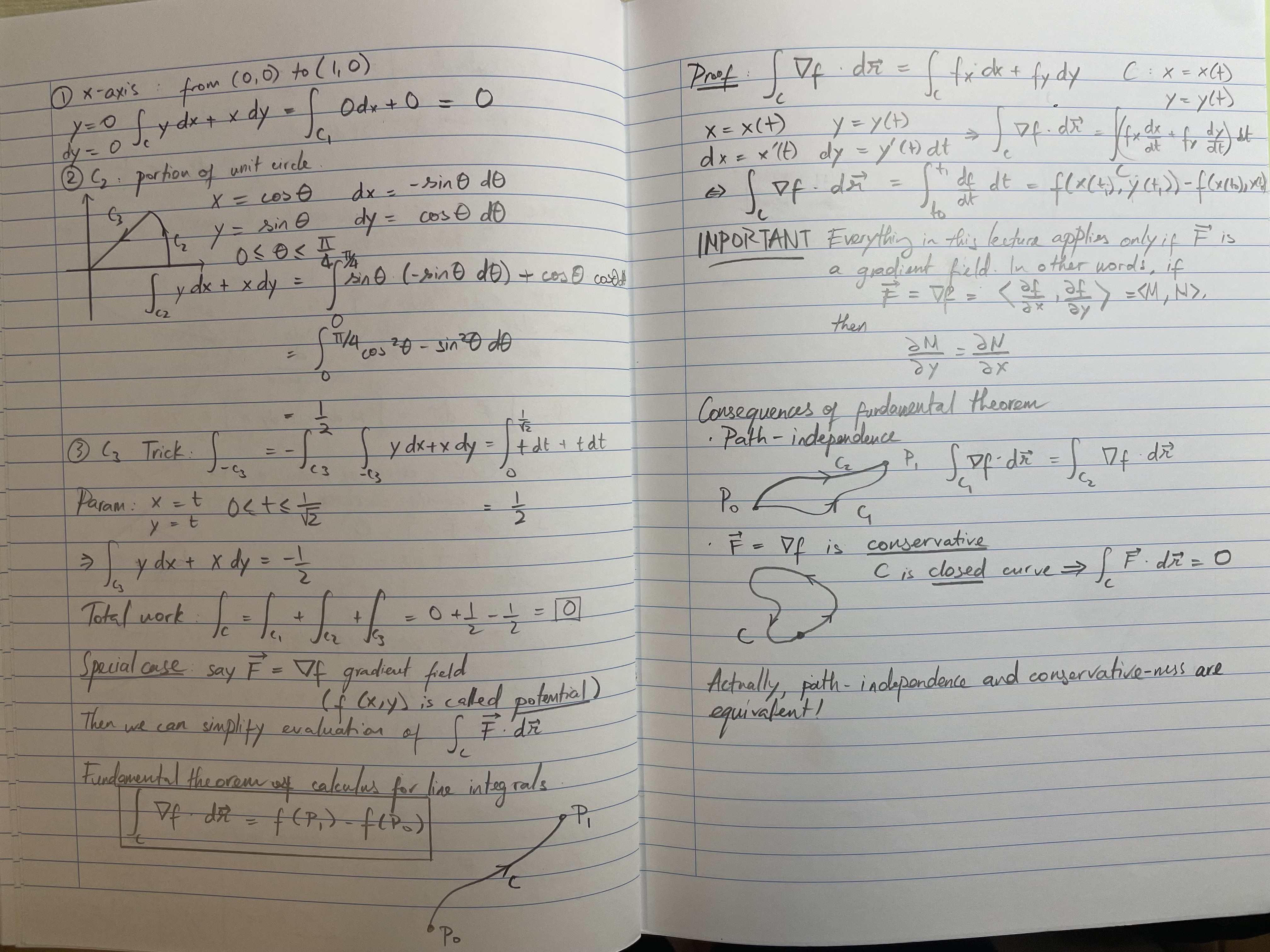
Working through Prof. Denis Auroux’s MITOCW course, Multivariable Calculus (Fall 2007), sparked my interest in mathematics beyond the IB syllabus. Combining this curiosity with my interest in machine learning, I wrote “Deriving Regularization in Machine Learning Using Lagrange Multipliers” for my Mathematics Extended Essay, supervised by Mr. Renato Rainone. I investigated how constraints on model parameters relate to regularization penalties through the Lagrangian formulation, examining when the two approaches yield equivalent solutions. Drawing on work by Andrew Ng and Christopher Bishop, I explored how regularization addresses overfitting, extended the discussion to the Karush-Kuhn-Tucker conditions, and illustrated the theory with a real-world dataset. By the end, I had worked my way back to the beginning: the mathematics behind techniques I had first learned to use.

Working through Prof. Denis Auroux’s MITOCW course, Multivariable Calculus (Fall 2007), sparked my interest in mathematics beyond the IB syllabus. Combining this curiosity with my interest in machine learning, I wrote “Deriving Regularization in Machine Learning Using Lagrange Multipliers” for my Mathematics Extended Essay, supervised by Mr. Renato Rainone. I investigated how constraints on model parameters relate to regularization penalties through the Lagrangian formulation, examining when the two approaches yield equivalent solutions. Drawing on work by Andrew Ng and Christopher Bishop, I explored how regularization addresses overfitting, extended the discussion to the Karush-Kuhn-Tucker conditions, and illustrated the theory with a real-world dataset. By the end, I had worked my way back to the beginning: the mathematics behind techniques I had first learned to use.

(B) PUTTING IDEAS TO THE TEST

2026

ENGINEERING, COMPUTING & PHYSICS

01

WICO - Smart School-Bus Prototype

Gold award for our smart school-bus prototype

GOLD

02

UC Berkeley CALICO - Informatics Contest

Bronze award, an ICPC-style team programming competition for high school students

BRONZE

03

Singapore Physics League

Bronze award

BRONZE

2025

ECONOMICS & MATHEMATICS

01

Vietnam Economics Olympiad

Silver award

SILVER

02

International Youth Math Challenge (IYMC)

Bronze honor

BRONZE

(D) MATH RESEARCH

(02) MODELS AT WORK ✶

VIET VANG SOFTWARE ✶ IMCI SOFTWARE

MODELS AT WORK

MODELS AT WORK

VIET VANG SOFTWARE

VIET VANG SOFTWARE

During my internship at Viet Vang Software, I worked with historical data for 30 Vietnamese stocks, sourced through the vnquant Python package. The dataset covered daily prices and trading volumes from 4 January to 29 October 2021, with the goal of predicting closing prices for 1-29 November 2021. I developed Bayesian ridge regression models, compared them with random forests, and explored LSTM networks for modelling temporal dependencies. Using pandas and scikit-learn, I prepared the data for training and testing, then visualized model estimates against observed prices in Matplotlib.

During my internship at Viet Vang Software, I worked with historical data for 30 Vietnamese stocks, sourced through the vnquant Python package. The dataset covered daily prices and trading volumes from 4 January to 29 October 2021, with the goal of predicting closing prices for 1-29 November 2021. I developed Bayesian ridge regression models, compared them with random forests, and explored LSTM networks for modelling temporal dependencies. Using pandas and scikit-learn, I prepared the data for training and testing, then visualized model estimates against observed prices in Matplotlib.

IMCI SOFTWARE

IMCI SOFTWARE

As AI tools such as Cursor, Codex, and Claude Code become part of everyday work, keeping track of separate subscriptions becomes a task of its own. During my internship at IMCI Software, I worked on a TypeScript application to bring those records into one place, using Prisma and PostgreSQL to manage subscription data. I prototyped agentic workflows with the Vercel AI SDK for subscription detection and reconciliation across more than ten AI APIs, and defined metrics to assess accuracy, reduce manual checking and keep automated decisions traceable.

As AI tools such as Cursor, Codex, and Claude Code become part of everyday work, keeping track of separate subscriptions becomes a task of its own. During my internship at IMCI Software, I worked on a TypeScript application to bring those records into one place, using Prisma and PostgreSQL to manage subscription data. I prototyped agentic workflows with the Vercel AI SDK for subscription detection and reconciliation across more than ten AI APIs, and defined metrics to assess accuracy, reduce manual checking and keep automated decisions traceable.

(03) WIRED UP ✶

SMART SCHOOL BUS ✶ WICO GOLD

WIRED UP

A snapshot of our presentation poster which won the award!

A snapshot of our presentation poster which won the award!

(A) THE PROTOTYPE

With students from Vietnamese schools and UWC ISAK Japan, I helped develop a smart school-bus prototype that earned gold at WICO. I worked on the ESP32-based electronics and Flutter web frontend, connecting attendance records with bus-location information. An MFRC522 RFID reader communicates with the ESP32 over SPI to verify students as they board. The system links GPS tracking to a Wi-Fi-based REST API server, displaying location and attendance on a dashboard and notifying parents of boarding events. Our prototype tests recorded 98.8% attendance accuracy across more than 100 boarding and exit events, with parent notifications arriving in under five seconds.

With students from Vietnamese schools and UWC ISAK Japan, I helped develop a smart school-bus prototype that earned gold at WICO. I worked on the ESP32-based electronics and Flutter web frontend, connecting attendance records with bus-location information. An MFRC522 RFID reader communicates with the ESP32 over SPI to verify students as they board. The system links GPS tracking to a Wi-Fi-based REST API server, displaying location and attendance on a dashboard and notifying parents of boarding events. Our prototype tests recorded 98.8% attendance accuracy across more than 100 boarding and exit events, with parent notifications arriving in under five seconds.

98.8%

98.8%

ATTENDANCE ACCURACY

100+

100+

BOARDING AND EXIT EVENTS

<5s

<5s

PARENT NOTIFICATIONS

GOLD

GOLD

WICO

(04) BUILDING TOGETHER ✶

CLUBS ✶ COUNCIL ✶ FAIR

BUILDING TOGETHER

BUILDING TOGETHER

001

001

HANDS-ON ENGINEERING CLUB

HANDS-ON ENGINEERING CLUB

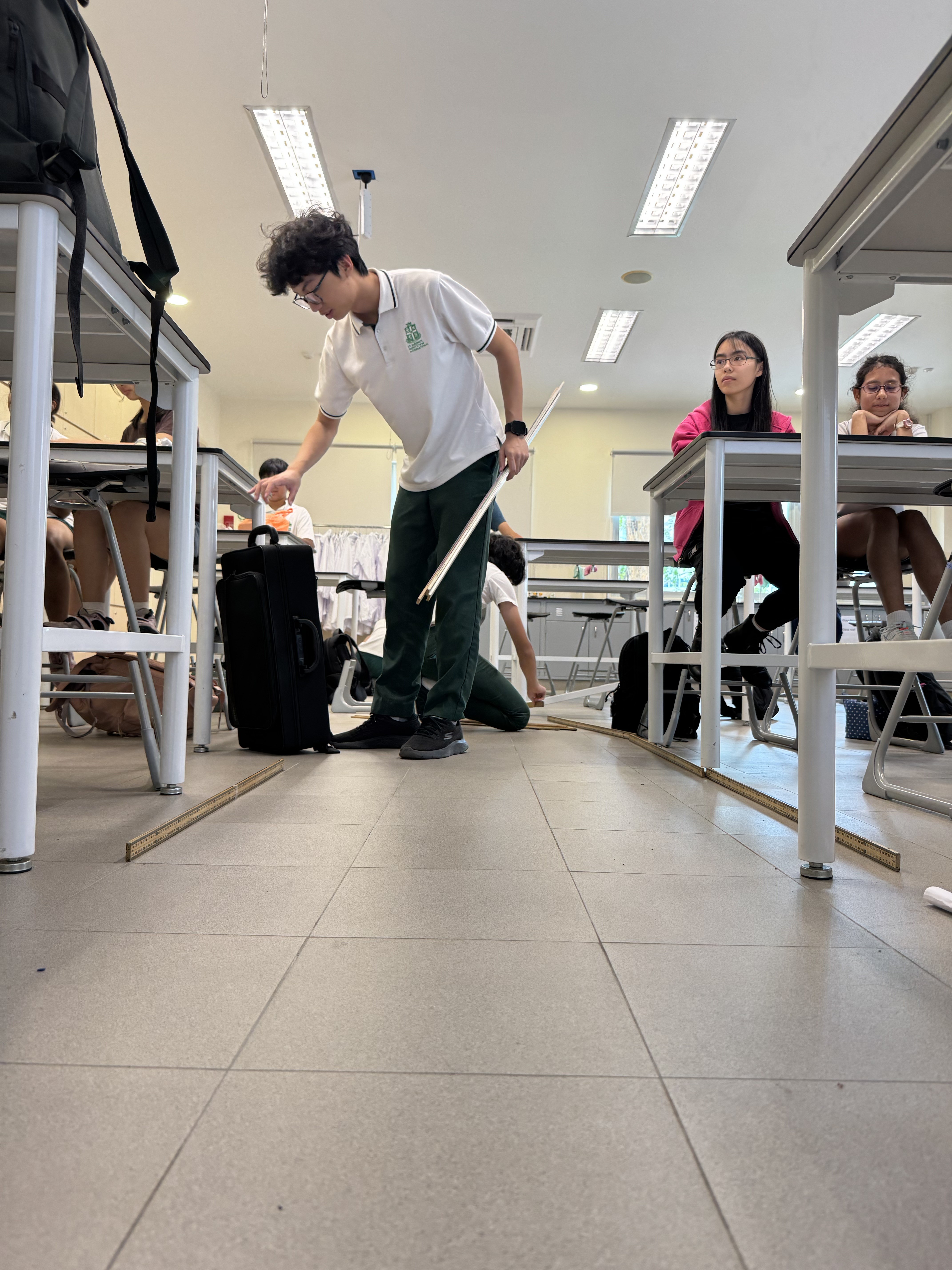
I taught 40 students in Grades 7-11, exploring structural engineering through CAD-designed bridges and electronics through Arduino projects. We also built race cars, tested egg-drop designs and experimented with model planes, giving students opportunities to see how their design choices held up in practice. Together, we co-built a Plinko-style pull-tab collector that attracted 60+ visitors daily, supporting a community initiative in Tondo, Philippines.

Through a collaboration with Robotics Unbound, another school CCA I participated in, we brought a hands-on robotics session to Sallim Mattar Mosque. Younger children tried building from scratch, while older participants used the Scratch programming language to explore how their instructions could bring a creation to life.

002

002

HANOI ELECTRONICS CLUB

HANOI ELECTRONICS CLUB

PRESS ↗

PRESS ↗

I led a 10-member club, designing Arduino projects and hands-on kit workshops for 100+ participants, from primary-school pupils to high-school students. One project was an infrared security box that triggered a piezo buzzer when it detected an intruder. Students could connect what they wrote in code to something immediate: interrupt the beam, hear the alarm.

For more advanced participants, we introduced a theremin-style instrument, exploring how hand movements could control pitch without touching the device. These projects gave students room to experiment with the relationship between sensor inputs and outputs, adjusting their code and listening, or looking, for the result. We also turned our builds into YouTube tutorials so participants could revisit the steps and continue experimenting at home.

003

003

STEM COUNCIL & STEM FAIR

STEM COUNCIL & STEM FAIR

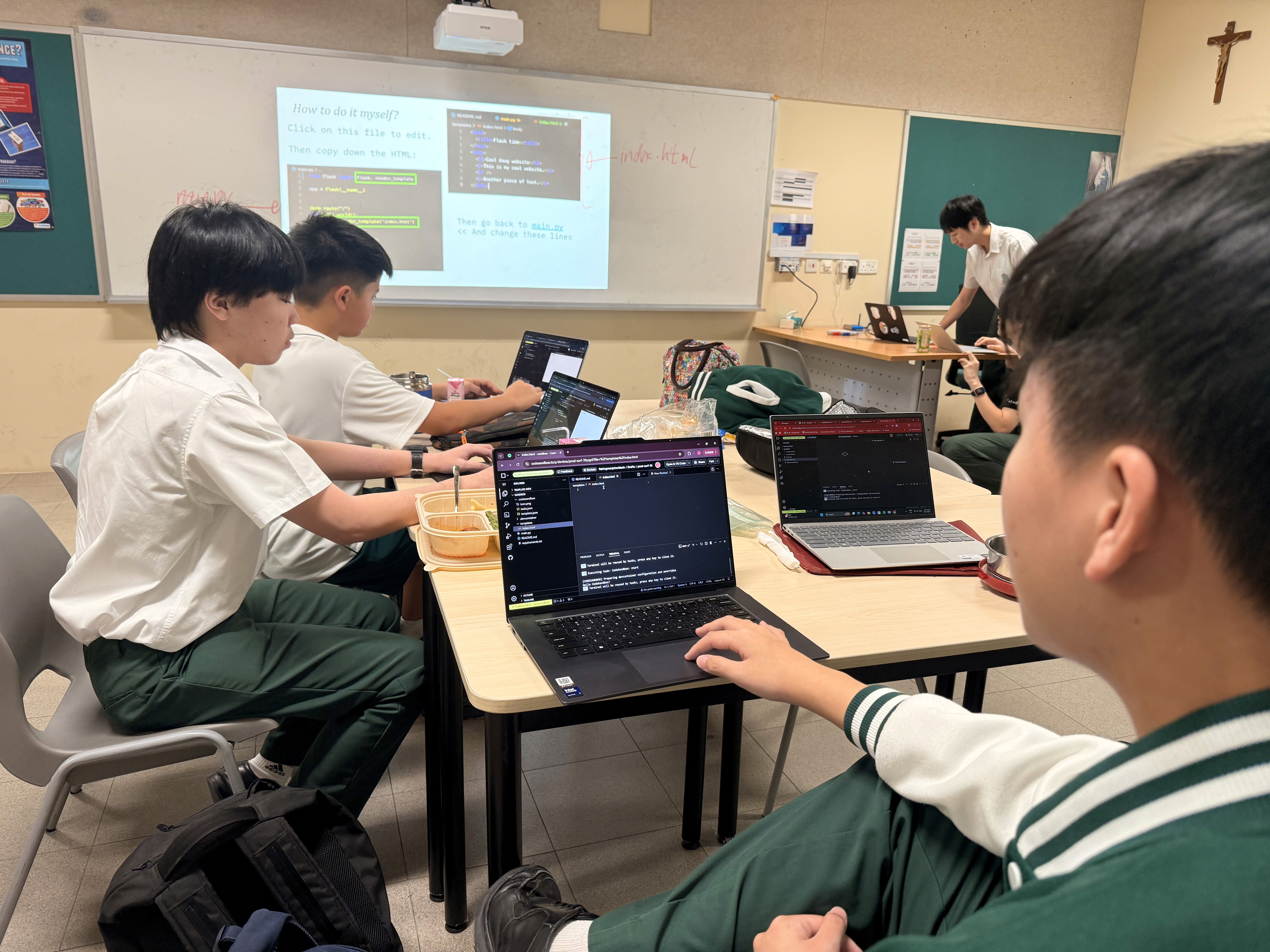
I helped lead web-development and trebuchet-building sessions, alongside Pi Day celebrations featuring a digit-recitation contest. For our school-wide Soleil Nouveau festival, we put together an interactive room where visitors could try an electronic game console and control fractal patterns with hand gestures.

The gesture controls built on my earlier work with OpenCV and Google’s MediaPipe Hands, using hand-landmark coordinates to translate movement into game controls. My virtual steering wheel for driving games earned First Place at the SJII STEM Fair in 2025. I later applied hand tracking to let visitors manipulate fractal patterns at Soleil Nouveau.

© 2026 MINH™
© 2026 MINH™
HANOI ⇄ SINGAPORE
HANOI ⇄ SINGAPORE
BACK TO TOP ↑
BACK TO TOP ↑